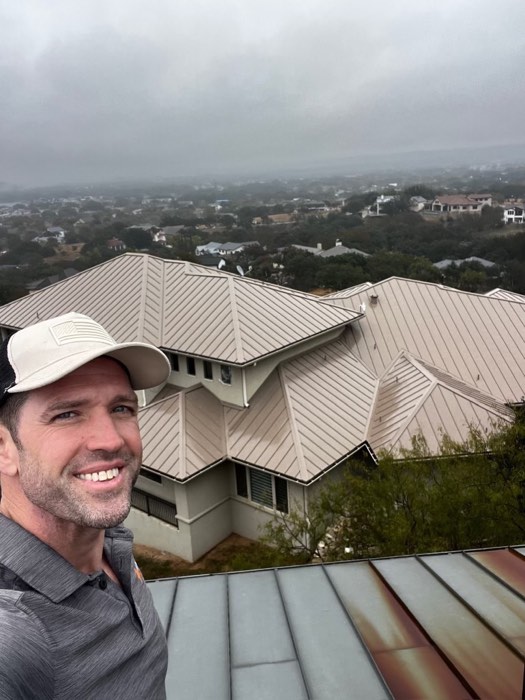
A roof is both an architectural surface and a complete assembly. The strongest material choices resolve appearance, detailing, and performance together.
01
Start with the complete system
Standing seam describes metal roof panels joined at raised vertical seams. Architectural systems often conceal primary fasteners beneath the seam or clip, creating uninterrupted lines and allowing for movement. Panel width, seam height, clips, fastening, metal thickness, coating, deck, and roof geometry all affect the finished roof.
Ask which standing-seam assembly is being considered for your home and how it responds to the slope and form. A compact gable, a broad hip, and a roof divided by stone walls or dormers need different panel layouts and transition details.
02
Why it works with Austin architecture
Repeating seams can reinforce a roof pitch, give a long plane a measured rhythm, and pair naturally with limestone, glass, steel, stucco, and warm wood. On transitional and Hill Country homes, a well-proportioned metal roof can calm a composition with strong masonry or landscape character.
Color is only part of the effect. Gloss, texture, panel width, seam frequency, and changing daylight influence how the roof reads. View larger samples outdoors from the drive, garden, upper rooms, and other important sightlines.
03
Details that make it feel architectural
Panel layout is visible design work. Major roof planes, end-panel widths, valleys, hips, ridges, rakes, walls, curbs, and lower roofs should form a coherent pattern. Complex geometry may require thoughtful compromises that are best resolved before installation.
Plumbing vents, flues, skylights, mechanical curbs, and future solar attachments interrupt the panel field and create water-management details. Sound also depends on the complete build-up, including deck, underlayment, insulation, attic, and ceiling assembly.
04
Heat, storms, trees, and access
Central Texas brings intense sun, temperature swings, wind-driven rain, hail, falling limbs, pollen, and long periods of heat. Metal expands and contracts, so panel length, clip movement, fastening, transitions, and compatible accessories should suit the selected system.
Impact information, finish data, and maintenance guidance should be reviewed for the exact product. Steep drives, protected landscapes, tight side yards, lake or canyon exposure, and mature trees also shape panel handling, staging, drainage, and future care.
05
Questions to bring into a material conversation
Use these questions to compare products and connect the material choice to the architecture and assembly.
Which metal and finish are being proposed?
Ask for the substrate, thickness, coating or finish, color samples, and current manufacturer literature.
How will the panels be laid out?
Panel length, width, seam profile, forming method, valleys, penetrations, and edge conditions affect appearance and constructability.
How are transitions handled?
Review the approach at walls, chimneys, skylights, valleys, ridges, lower roofs, and other penetrations.
What is beneath the metal?
Deck condition, underlayment, ventilation, attachment, and compatible accessories are essential parts of the assembly.
What care should I expect?
Discuss drainage, debris, applicable sealants and accessories, coatings, storm observations, and access for future service.
Bring the material into the conversation
Share the property location, project stage, materials you are considering, and the questions driving the decision. Plans, safe ground-level roof photos, inspiration images, reports, and existing proposals can make the first conversation more specific.
Keep notes on the product, profile, finish or blend, sample, and current literature you review. If the selection changes, revisit related accessories, flashings, layout decisions, approvals, and scope.
Daniel and Will can help connect that information to the house, identify the details that matter most, and shape a practical next step.