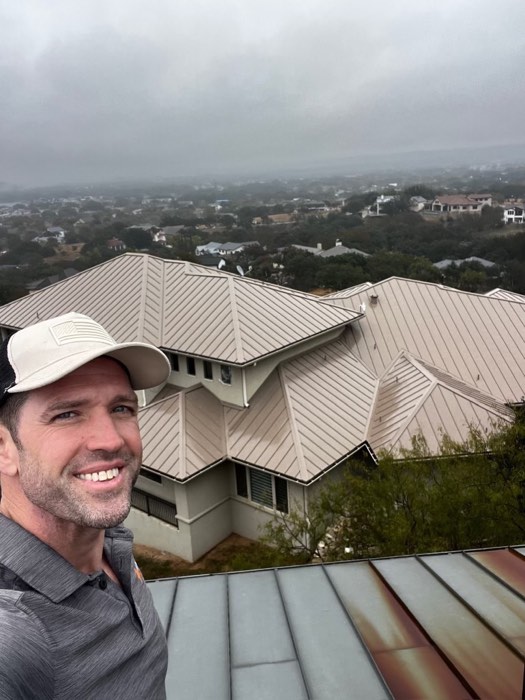
Local architecture, terrain, landscape, and important sightlines all shape how a roof should look and perform.
01
Homes shaped by the land
Acreage, exposed slopes, lake-area views, long drives, outbuildings, and varied terrain can make a Spicewood roof both prominent and practical. The material should fit the home while respecting how the property is used.
A good first review identifies where the roof is seen from, where water moves, which areas need protection, and how the selected material will age in the setting.
02
Metal, composite, slate, and tile
Standing-seam metal can bring order to simple roof forms, porches, pavilions, and contemporary Hill Country homes. Synthetic slate, shake, tile, designer composition, natural slate, and clay tile can add depth when the home asks for stronger texture.
The comparison should name the product, assembly, finish, accessories, and care expectations. Structural review remains important for heavier natural slate and tile directions.
03
Access and property protection
Gravel drives, grades, gates, stonework, trees, fencing, septic areas, pools, and finished exterior spaces can all influence delivery, staging, daily cleanup, and future service. These details belong in the scope before work begins.
Material handling is especially important when long panels, specialty tiles, or heavier assemblies are involved. The site plan should be practical as well as respectful of the property.
04
Weather, fire, and maintenance context
Central Texas roof decisions often include hail, sun, wind-driven rain, debris, ventilation, and fire documentation. Impact and fire classifications are product-specific context, not blanket promises.
Current insurer, HOA, fire, utility, and property requirements should be confirmed for the address. Future maintenance should also be considered early, especially around valleys, trees, penetrations, and roof areas that are difficult to access.