
Roofing materials
Materials with architectural presence.
Compare standing-seam metal, synthetic slate, shake and tile, natural slate, and clay tile through the character, weight, details, and care each brings to your home.
Three leading directions
01
A focused palette. A thoughtful comparison.
The Honest Roofer focuses on architectural standing-seam metal; synthetic or composite slate, shake, and tile; and natural slate and clay tile. Each can give a distinctive home a clear material identity when its scale, weight, detailing, and character align with the architecture.
Standing-seam metal
Precise lines and concealed-fastener assemblies for contemporary, transitional, and Hill Country architecture.
→Synthetic & composite
Slate, shake, and tile character through manufactured products with their own weight, testing, and aging profiles.
→Slate & tile
Natural depth and regional character that ask for early structural review and disciplined specialty detailing.
→Visual roof options
Compare the roof at real scale.
Material names only go so far. The visible roof plane, profile, penetrations, drainage path, and surrounding property all influence whether an option feels right on the home.
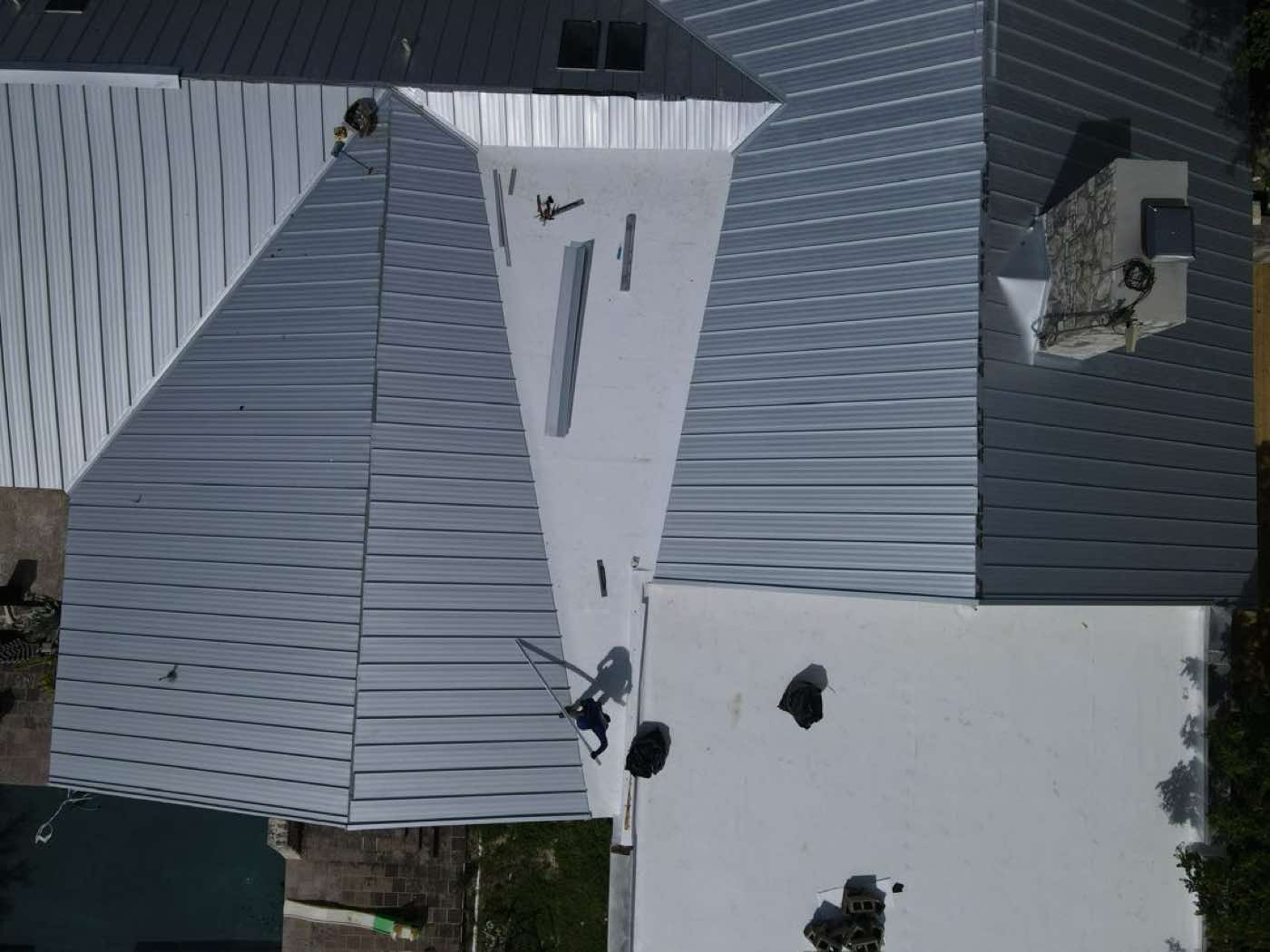
Roof option
Standing-seam metal
Clean lines for contemporary and Hill Country forms, with panel layout, edges, valleys, and penetrations resolved early.
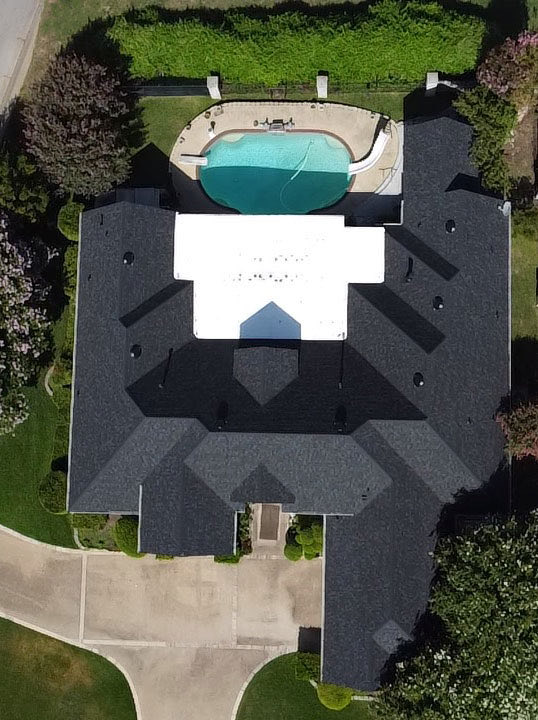
Roof option
Designer composition
Dimensional architectural shingles can support established homes when color, profile, drainage, and scope are compared clearly.
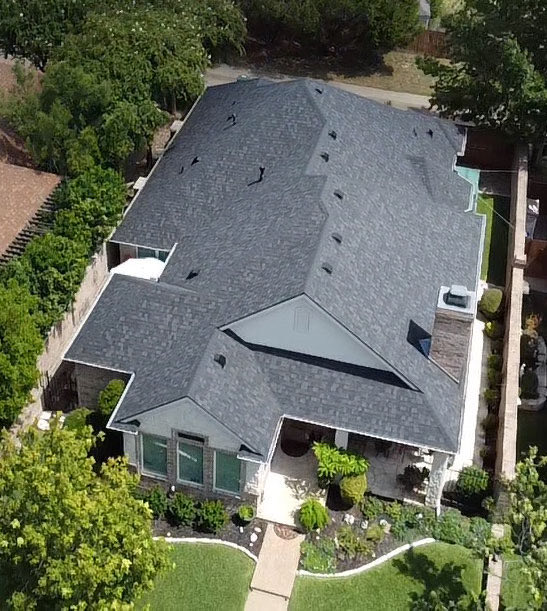
Roof option
Grey impact-rated systems
A quieter grey roof can work across transitional homes when documentation, ventilation, and repairability are part of the decision.
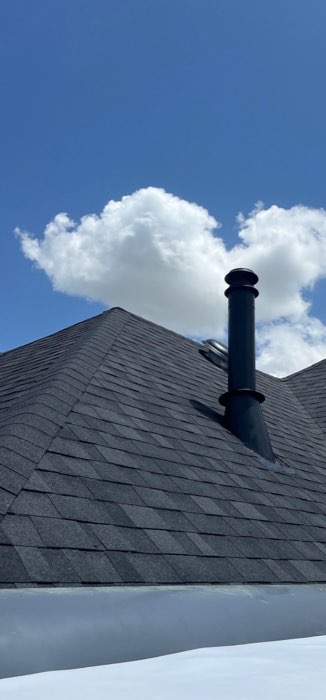
Roof option
Roof detail and penetrations
Vents, flashings, accessories, and visible roof geometry affect how polished the final assembly feels.
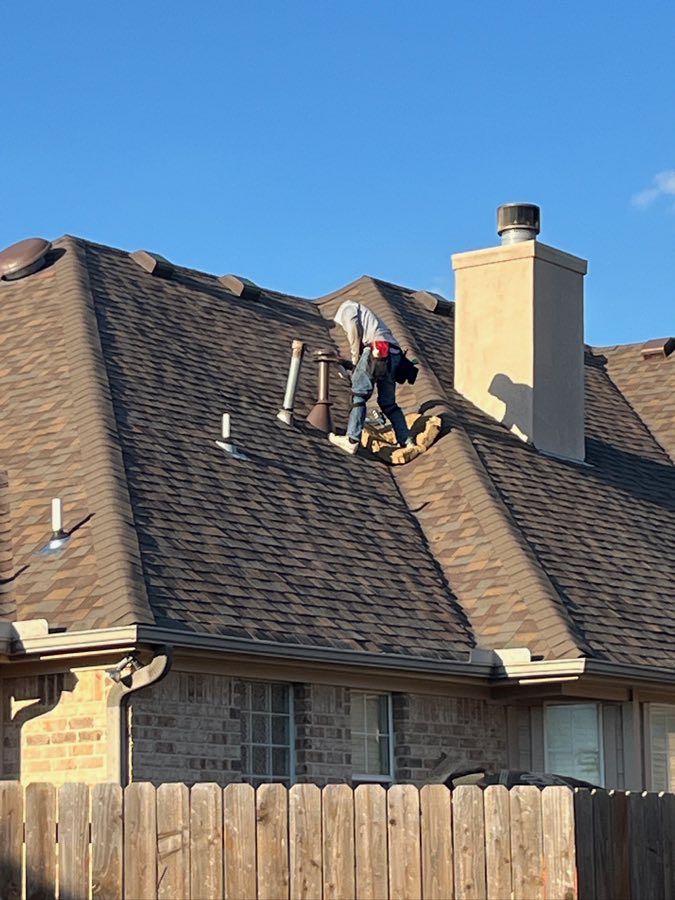
Roof option
Field repair and inspection
Existing conditions, safe access, prior repairs, and problem areas should shape the first recommendation.
Supporting options
More ways to resolve the roof.
Copper accents
Valleys, small roofs, wall details, and gutters can add warmth and develop a distinctive patina. Compatibility, runoff, and craft all deserve attention.
Stone-coated steel
A metal-based system with a granular surface and varied profiles. Compare fastening, underlayment, ventilation, accessories, and current fire and impact documentation.
Designer Class 4 systems
Some architectural composition systems offer thicker profiles and documented impact testing. Compare the exact product alongside appearance, assembly, and repairability.
Mixed-material roofs
Metal accents, slate-like fields, tile, and copper can work together when each transition has an architectural and practical purpose.
How to compare
Nine questions for a confident material choice
- 01
Architecture
Does the scale, texture, color, and line strengthen the form of the home?
- 02
Structure
Is the framing and deck appropriate for the proposed assembly, or should structural input come first?
- 03
Geometry
How will the material resolve valleys, hips, curves, dormers, walls, chimneys, and low-slope transitions?
- 04
Water
How do underlayment, flashings, penetrations, edges, and upper-to-lower roof conditions manage drainage?
- 05
Heat and ventilation
How do color, product data, attic conditions, insulation, and ventilation work together?
- 06
Weather documentation
Which current fire, wind, or impact information applies to the named product and assembly?
- 07
Access
How will delivery, staging, landscaping, steep drives, and future service affect the plan?
- 08
Long-term care
What cleaning, observations, repairs, and spare materials should the homeowner anticipate?
- 09
Approval
Which permit, HOA, architectural, insurer, or design-team questions should be confirmed early?
See the material at the right scale
A small piece shows color and touch. A larger mockup begins to reveal exposure, shadow, pattern, and accessories. An installed roof shows scale and weathering. View samples outdoors and from the distances that matter around your home.
When comparing proposals, align the descriptions. Look for the named material, deck work, underlayment, ventilation, metal details, disposal, access, coordination, allowances, and exclusions so the totals reflect comparable scopes.

Talk with Daniel and Will
Explore roofing materials with Daniel and Will.
Tell Daniel and Will what you know about the home and roof, including any material interest. Use the consultation to talk through your questions.